

Biomedical Sciences Program
Biomedical Sciences
The program prepares graduates with a strong foundation in modern biology, medicine, and pharmaceutical sciences, enabling them to investigate disease mechanisms, apply biomedical techniques, and contribute to future healthcare solutions.
Science for Humanity – Innovation Starts with You
Biomedical Sciences is an interdisciplinary field connecting modern biology with medicine and pharmaceutical sciences to understand disease mechanisms and support the development of future diagnostic, preventive, and therapeutic solutions.
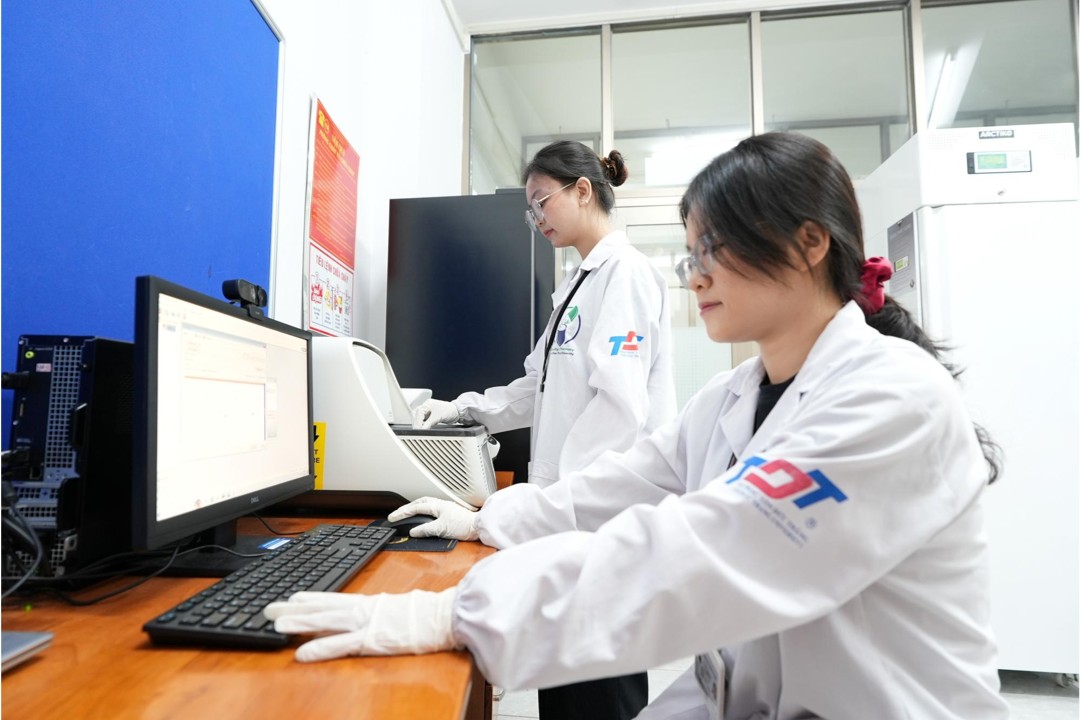
The TDTU program emphasises scientific thinking, experimental competence, and problem-solving. Students gain experience in laboratory techniques, data analysis, and research under the guidance of experienced faculty members.
Program highlights
An interdisciplinary, practice-oriented, and research-focused learning environment prepares students for rapidly developing biomedical fields.
Interdisciplinary foundation
Integrates biology, medicine, pharmaceutical sciences, technology, and data analysis.
Early practical training
Develop laboratory competence through practical courses and project-based learning.
Internationally trained faculty
Faculty members trained in different countries bring experience in research and professional collaboration.
Research participation
Opportunities to join research groups, scientific seminars, and faculty-led projects.
Scientific thinking
Develop the ability to formulate questions, design experiments, analyse data, and interpret findings.
International integration
Strengthen language and academic skills while gaining experience through partner institutions.
Four-year study pathway
A progressive journey from foundational sciences to advanced techniques, research, and biomedical applications.
Foundational sciences
Biology, chemistry, cell biology, foreign languages, and university learning skills.
Biomedical foundations
Physiology, pathology, immunology, pharmacology, and molecular biology.
Techniques and research
Genomics, bioinformatics, experimental design, and specialised techniques.
Professional applications
Advanced courses, internships, research, and completion of professional competencies.
What will you learn and practise?
The program develops scientific knowledge, experimental skills, data-analysis capabilities, and research competence.
Molecular and cell biology
Explore the structure, function, and regulation of biological processes at molecular and cellular levels.
Physiology, pathology, and immunology
Analyse body functions, disease mechanisms, and immune responses.
Genomics and bioinformatics
Work with biological data, computational tools, and applications in biomedical research.
Experimental design and implementation
Formulate hypotheses, design studies, conduct experiments, and evaluate results.
Pharmaceutical sciences
Understand drug actions, the drug-development process, and applications related to therapy.
Diagnostics and biomedical applications
Apply scientific techniques and methods to support diagnosis, prevention, and disease research.
Career opportunities
Biomedical Sciences graduates can build careers in research, biotechnology, pharmaceuticals, data analysis, and education.
Research institutes and centres
Investigate disease mechanisms, biomedical science, and healthcare solutions.
Biotechnology companies
Research, develop, and apply technologies in biological and healthcare fields.
Pharmaceutical companies
Work in research, development, testing, and scientific-support departments.
University laboratories
Support research, training, and the operation of laboratory techniques.
Biomedical data analysis
Apply bioinformatics and data-analysis methods to scientific and healthcare projects.
Postgraduate study
Pursue master's or doctoral education in Vietnam or abroad.
Ready to explore the world of Biomedical Sciences?
Explore admission methods, entry requirements, and the latest information about the Biomedical Sciences program at Ton Duc Thang University.